

Although the MBTA Commuter Rail is among the highest-ridership commuter rail systems in the United States, it remains underutilized relative to the scale, reach, and capacity of its network. Enhancing service frequency is essential, as it can not only boost transit ridership but also deliver significant benefits for regional mobility, economic growth, and environmental sustainability. Therefore, the MBTA has undertaken the "Regional Rail Modernization Program" to transition the system toward a "Regional Rail" model characterized by more frequent, bi-directional, clock-face (i.e., regular-interval), all-day service. This method of service delivery not only increases effective use of existing infrastructure, but also better aligns with more consistent all-day travel demand that has emerged following the COVID-19 pandemic.
Careful phasing and prioritization of investments are essential to both enable the gradual rollout of improved service levels and ensure the efficient use of capital resources. Accordingly, HNTB's Rail Operations Modeling & Planning team has conducted a comprehensive evaluation of existing MBTA operations and developed targeted investment recommendations for each commuter rail line. This website serves to present HNTB's findings and underlying methodology, translating complex rail operations analysis into an intuitive, interactive format for exploring results and key insights.
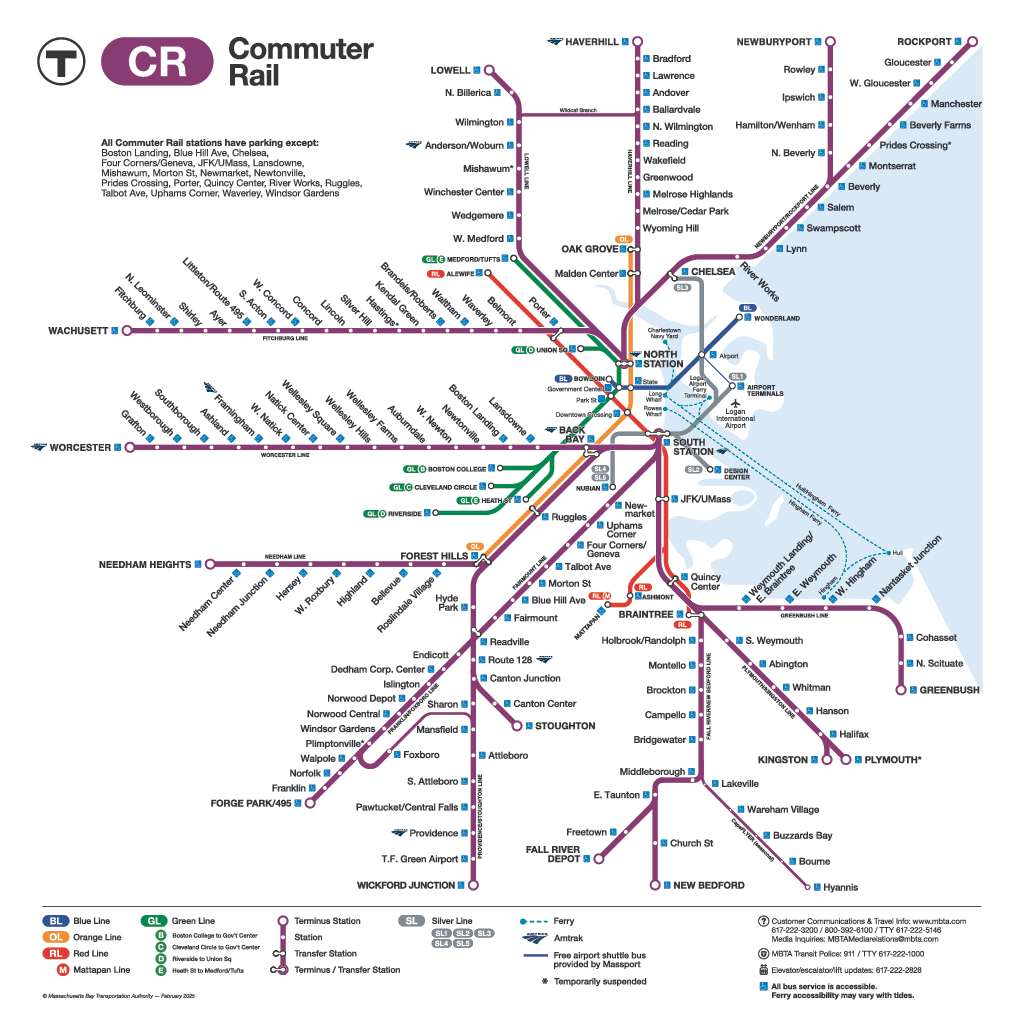
This site presents existing conditions, operations, and recommendations on a line-by-line basis. Shared assets and systemwide elements—such as the North and South Station terminal areas—are addressed in dedicated standalone sections. Select a line to get started.
For context, HNTB's Rail Operations Modeling & Planning methodologies as well as a glossary of railroad terminology are provided. Select "Methodologies" or "Glossary" to learn more.
Key focus areas include eliminating single-track bottlenecks, modernizing signal systems, upgrading grade crossings, and expanding layover facilities. These investments will reduce delays, increase capacity, and improve reliability across the system.
Weather resilience is also a critical consideration. Our planning accounts for seasonal variations and implements solutions to minimize weather-related service disruptions.